How Do Insurance Companies Determine Car Accident Fault in Los Angeles?
How Do Insurance Companies Determine Car Accident Fault in Los Angeles?
Insurance companies determine car accident fault by comparing the evidence with California traffic laws and evaluating how each driver’s actions contributed to the collision. Adjusters review driver statements, photographs, witness accounts, vehicle damage, available video, and police reports.
Their conclusions can affect whether an injury claim is paid and how much compensation is offered.
For people injured in Los Angeles, the key issue is often whether an insurer’s version of events accurately reflects what happened. A disputed lane change on the 405 or an intersection crash on Wilshire Boulevard may involve conflicting accounts and incomplete evidence.
California also allows responsibility to be shared. Understanding how insurers investigate crashes—and how to challenge an unsupported conclusion—can help you protect your claim before accepting a settlement.
What Are Insurance Adjusters Looking for After a Crash?
An adjuster investigates the circumstances of the accident, evaluates insurance coverage, and decides how the insurer will respond to a claim. The investigation generally centers on three questions:
- What did each driver do before and during the collision?
- Did someone fail to use reasonable care?
- How did that conduct contribute to the crash and resulting injuries?
Careless conduct may include following too closely, making an unsafe lane change, failing to yield, or driving too fast for conditions.
However, identifying a driving mistake is only part of the analysis. The insurer must also consider whether that mistake contributed to the collision. A driver’s unrelated conduct does not automatically establish responsibility for another person’s injuries.
Fault, Coverage, and Damages Are Separate Questions
A driver may be responsible for causing a collision, but insurance payment still depends on available coverage, policy limits, and the losses supported by the evidence.
Likewise, an insurer might accept that its policyholder caused the crash while disputing whether particular medical treatment was accident-related. Understanding which issue is being challenged helps you respond with the right documentation.
What Evidence Helps Determine Car Accident Fault?
The strongest investigations compare several sources rather than relying entirely on either driver’s account.
Police Reports and Statements
A collision report may document the drivers involved, witness information, road conditions, vehicle positions, and an officer’s observations. It can provide a useful starting point.
Still, an officer may arrive after the vehicles have moved and may not have witnessed the crash. A report can contain incomplete information or factual errors. An officer’s assessment is relevant evidence for an insurer’s investigation, but it does not independently settle every civil liability question.
Driver statements also matter. An adjuster may compare the initial report with later descriptions to identify inconsistencies. Describe what you observed accurately and distinguish what you remember from what you are estimating.
Photographs and Video
Useful images may show:
- The vehicles’ positions before they were moved.
- Damage to each vehicle.
- Lane markings, signals, and traffic signs.
- Debris, tire marks, and roadway obstructions.
- Visibility problems or construction conditions.
In Los Angeles, nearby businesses, parking facilities, homes, or other vehicles may have relevant footage. Do not assume an intersection camera recorded the collision or that recordings will remain available indefinitely. Prompt preservation requests can matter.
Witnesses and Physical Evidence
Independent witnesses may help establish which driver entered an intersection first or whether a vehicle abruptly crossed lanes.
Damage patterns can also help test competing accounts. For example, the location of an impact may support one description of a sideswipe over another. Complex disputes may require an accident reconstruction specialist to examine vehicle movement, impact forces, and available electronic data.
Medical records serve a different purpose: they help document injuries and their relationship to the collision. They generally do not establish which driver had the right of way.
How California’s Comparative Fault Rule Affects Compensation
California follows pure comparative negligence. An injured person’s damages can be reduced by their percentage of responsibility rather than automatically eliminated because they share fault. California’s comparative fault jury instruction requires proof that the injured person was negligent and that their negligence substantially contributed to the harm. justia.com
Hypothetical example: A driver suffers $100,000 in proven damages. The driver is assigned 20% responsibility, while the other driver is assigned 80%. Applying that allocation would reduce the injured driver’s damages to $80,000 before considering other issues affecting payment.
That is why a disputed percentage deserves attention. A seemingly small change in responsibility can materially affect a claim’s value.
California’s system generally permits some recovery even when an injured person bears most of the responsibility, provided another party also contributed. Shared fault alone does not create a 50% or 51% cutoff. justia.com
There is no universal calculator that produces the correct fault percentage from a few facts. The allocation must reflect the conduct and causal contribution supported by the evidence.
Why Common Los Angeles Crashes Can Produce Fault Disputes
Traffic patterns provide context, but they do not replace an investigation into the specific collision.
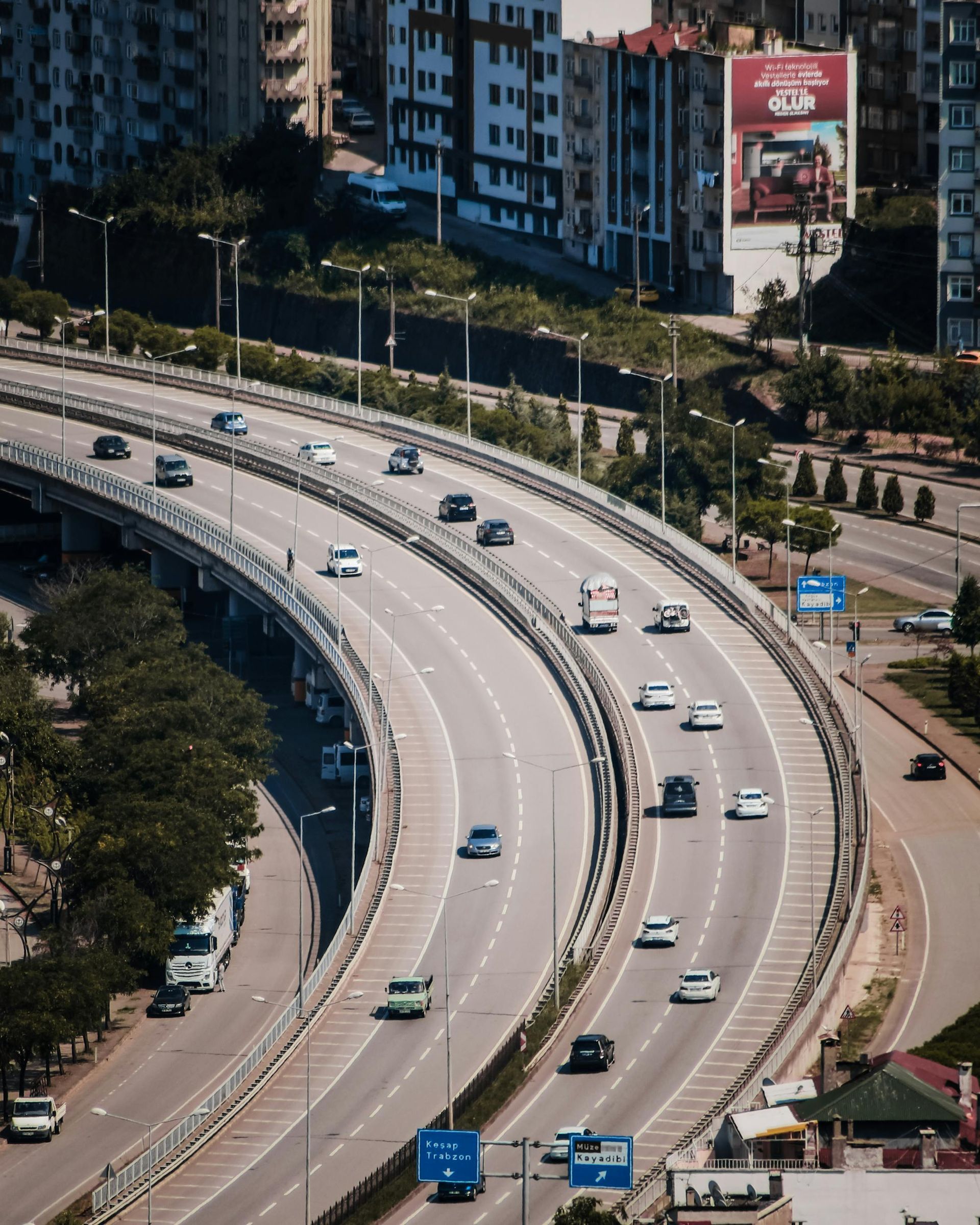
Freeway Lane Changes and Merging
After a sideswipe on the 101 or 405, each driver may claim the other crossed the lane line. Relevant evidence includes the impact location, dashcam footage, witness observations, and the vehicles’ movements before contact.
Using a turn signal does not, by itself, establish that a lane change was safe. Likewise, being in an established lane does not resolve every question about a driver’s conduct.
Rear-End and Chain-Reaction Collisions
A rear-end impact often raises questions about following distance, attention, and braking. However, an investigation should consider whether another vehicle cut in abruptly, whether a vehicle was pushed forward by a separate impact, and the sequence of a multicar collision.
In a chain reaction, the order of impacts may determine whether a driver caused a collision or was pushed into another vehicle.
Intersection and Left-Turn Accidents
Drivers may disagree about the signal color, speed, or opportunity to yield. A statement that one driver “had the green light” may need support from witnesses or video.
Even when one driver failed to yield, evidence that another driver’s conduct contributed to the collision may affect the allocation of responsibility.
How to Challenge an Insurance Company’s Fault Decision
An insurer’s initial position can be challenged. A focused response should identify the disputed conclusion and explain what evidence supports a different result.
Start by requesting a written explanation of the insurer’s position. Ask what conduct it attributes to you and what evidence supports that conclusion.
Next, organize your response:
- Create a clear timeline. Describe your lane, direction, speed estimate, traffic conditions, and observations.
- Identify factual errors. Correct inaccurate vehicle descriptions, road layouts, or statements attributed to you.
- Submit supporting materials. Provide relevant photographs, witness information, video, and diagrams.
- Explain missing context. A close-up damage photograph may require a wider scene image to make sense.
- Request reconsideration. State specifically why the evidence supports a different fault allocation.
Keep copies of submissions and correspondence. If a collision report contains an error, ask the reporting agency about its process for requesting a correction or submitting additional information.
An attorney can evaluate disputed evidence, identify other potentially responsible parties, and advise whether further negotiation or litigation is appropriate. An insurance adjuster’s conclusion does not bind a court deciding liability.
Protecting Your Claim After a Los Angeles Car Accident
Early documentation can make later disagreements easier to address.
Obtain medical care, preserve photographs and recordings, collect witness contact information, and notify your insurer promptly under your policy. Be accurate when describing the collision. Avoid guessing about distances, speeds, or events you did not see.
Cooperate with your own insurer’s reasonable requests under the policy. If the other driver’s insurer requests a recorded statement, consider obtaining legal advice first, particularly when injuries or liability are disputed.
Keep Reporting and Lawsuit Deadlines Separate
California requires an SR-1 report to the DMV within 10 days when a collision causes an injury, a death, or more than $1,000 in damage to the property of any one person. This report is separate from reports made to police or an insurance company and is required regardless of fault. qr.dmv.ca.gov
California’s general deadline for filing a personal injury lawsuit is two years from the injury. Exceptions and special procedures can change the applicable timeline. Do not assume that an ongoing insurance investigation extends your deadline to sue. Self Help Guide
If a public vehicle or government-controlled roadway may be involved, seek prompt advice about separate claim requirements.
Frequently Asked Questions About Car Accident Fault
Can I file a claim without a police report?
A missing police report does not automatically prevent an insurance claim. Photographs, video, witness accounts, repair records, and other evidence may help establish what happened. However, separate reporting duties may still apply. Preserve the available evidence and explain clearly why no report was prepared rather than assuming the insurer will investigate every missing detail.
Does the driver who reports the accident first have an advantage?
Reporting first does not establish who caused the collision. An early statement may shape the initial investigation, but the conclusion should reflect the evidence. Report the accident promptly and accurately. If the other driver’s account is incomplete, respond with specific corrections and supporting materials rather than relying on a competing accusation.
What if the two insurance companies disagree?
Each insurer may reach a different conclusion based on the evidence it reviewed. The disagreement may lead to further investigation, negotiation, or proceedings between insurers. Your own injury claim still requires attention. Ask how the dispute affects your claim and avoid assuming that discussions between carriers will preserve your legal deadlines.
Can passengers bring claims when both drivers share fault?
A passenger may have a claim against one or more responsible parties, depending on the circumstances. The investigation should consider every driver whose conduct contributed to the crash. Available insurance, the passenger’s injuries, and other applicable legal issues will affect potential recovery. A passenger does not automatically share a driver’s fault simply because they occupied the same vehicle.
Discuss a Disputed Fault Claim With Law Offices of David R. Denis, P.C.
A fair fault assessment should account for the evidence, the sequence of events, and each driver’s contribution to the collision. An early insurance decision may deserve closer review when it overlooks video, relies on inaccurate statements, or assigns responsibility without a clear explanation.
If you were injured in a Los Angeles car accident, contact Law Offices of David R. Denis, P.C. to discuss your circumstances and potential legal options. Understanding the evidence before accepting a settlement can help you make an informed decision.